


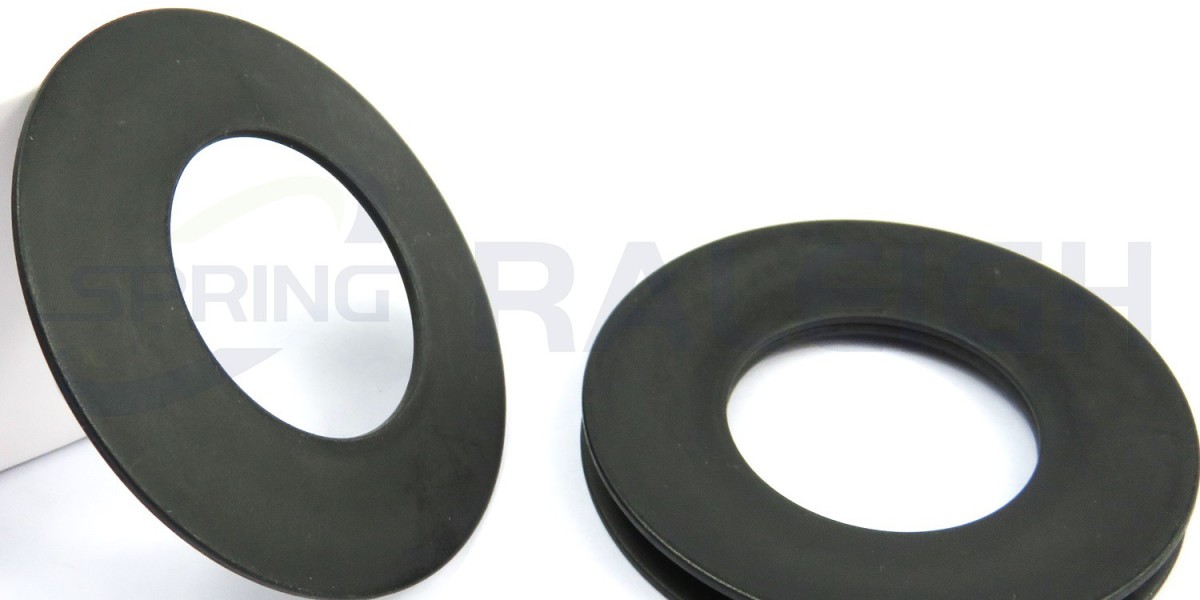


Applications of Wave Springs
1. Aerospace Industry
Wave springs are widely used in the aerospace industry due to their ability to provide high force in a small space. They are commonly found in aircraft actuators, landing gear mechanisms, and satellite components, where weight and space constraints are critical. The reduced material usage also contributes to fuel efficiency and overall system performance.
2. Automotive Industry
In the automotive sector, wave springs enhance efficiency and durability. They are employed in transmission systems, clutch assemblies, and braking systems to provide consistent force and improve longevity. Additionally, their ability to function under high-speed and high-temperature conditions makes them suitable for advanced automotive designs.
3. Medical Devices
Precision and reliability are paramount in medical applications, making wave springs a preferred choice. They are utilized in surgical instruments, implantable devices, and diagnostic equipment to ensure accurate performance in compact environments. Their corrosion resistance and biocompatibility further support their use in the medical field.
4. Electronics and Electrical Equipment
Wave springs contribute to the miniaturization of electronic components. They are used in connectors, switches, and precision instruments where space constraints are significant. Their ability to maintain a constant load over a range of deflections ensures reliability in sensitive electronic devices.
5. Industrial Machinery
Heavy machinery and industrial equipment benefit from wave springs in applications such as pumps, valves, and actuators. Their ability to handle high loads while maintaining a compact form factor ensures efficiency and longevity in demanding industrial environments.
6. Renewable Energy
With the growing focus on sustainable energy, wave springs are increasingly used in wind turbines, solar tracking systems, and other renewable energy technologies. Their durability and resistance to environmental factors contribute to the reliability and efficiency of energy generation systems.
In conclusion, wave springs are a versatile and efficient solution across multiple industries. Their ability to provide high performance while reducing space and weight requirements makes them indispensable in modern engineering applications.
Like
Comment
Share

Die Springs in Industrial Applications: Where and How They Are Used | #die spring

Like
Comment
Share
Inconel 718
Composition Analysis
Inconel 718 is a nickel-based precipitation-strengthened alloy, with carefully balanced chemical elements that contribute to its excellent properties.
Nickel (Ni) content is about 53%, serving as the primary component to provide good corrosion resistance and high-temperature stability.
Chromium (Cr) content is about 19%, enhancing oxidation and corrosion resistance.
Iron (Fe) content is about 18%, maintaining structural stability while affecting the alloy's mechanical properties.
Niobium (Nb) content is about 5%, which forms the γ'' phase (Ni₃Nb) and γ' phase (Ni₃(Al,Ti)), playing a crucial role in precipitation strengthening.
Molybdenum (Mo) content is about 3%, improving strength and corrosion resistance in complex environments.
Titanium (Ti) content is about 0.9%, and Aluminum (Al) content is about 0.5%. These elements help form the strengthening phase and improve overall mechanical performance.

Like
Comment
Share
Load more posts


Crop your avatar
